
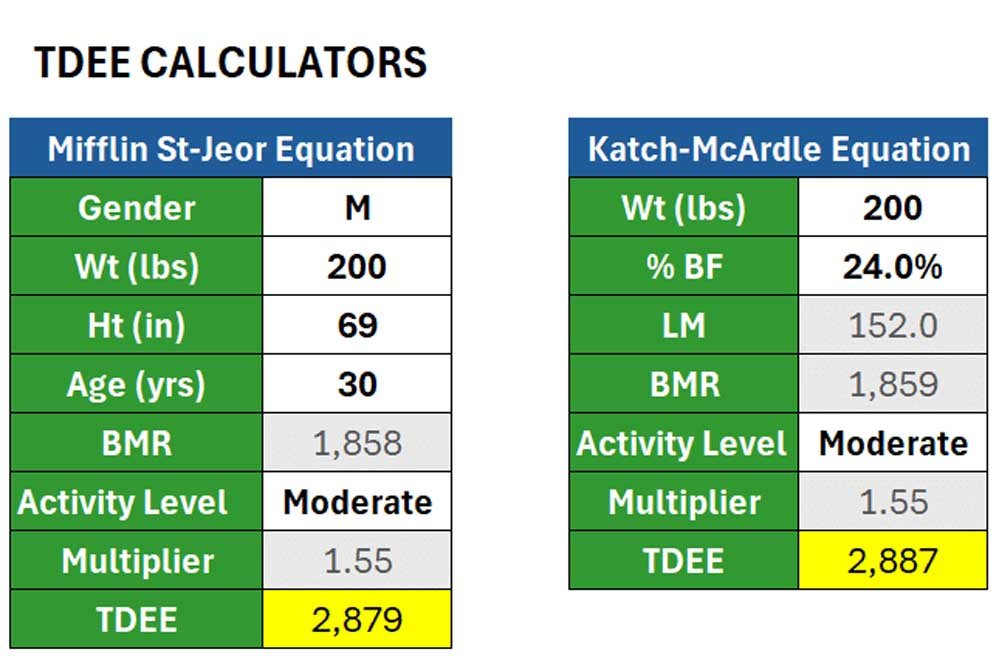
Understanding your caloric needs is fundamental to achieving any fitness goal, whether you’re aiming to lose weight, build muscle, or maintain your current physique. One of the most important metrics in nutrition science is your total daily energy expenditure, commonly known as TDEE. But here’s the reality: many people don’t know how to calculate their TDEE, and that’s where confusion and failed fitness plans begin.
In this guide, we’ll walk you through everything you need to understand about your calorie needs and show you exactly how to calculate your TDEE using proven formulas. By the end, you’ll have the knowledge to make informed decisions about your nutrition and achieve your fitness goals faster.
What Is TDEE? Understanding Total Daily Energy Expenditure
TDEE stands for Total Daily Energy Expenditure. It represents the total number of calories your body burns throughout an entire day, including activities, exercise, and basic bodily functions. Think of it as your body’s personal calorie budget—knowing this number is the foundation of any successful fitness plan.
Your TDEE isn’t a fixed number; it varies based on several factors, including your age, sex, weight, height, and most importantly, your activity level. This is why two people of the same weight can have dramatically different calorie needs.
The concept is simple but powerful: if you know how many calories you burn daily, you can precisely adjust your intake to achieve your goals.
Why Is TDEE Important for Weight Loss and Muscle Gain?
Understanding your maintenance calories—the amount you need to maintain your current weight—is the cornerstone of body composition changes.
For Weight Loss: To lose fat, you need to consume fewer calories than your TDEE. A caloric deficit of 300-500 calories below your total daily energy expenditure creates steady, sustainable weight loss without excessive muscle loss.
For Muscle Gain: Building muscle requires both a caloric surplus and proper training. Knowing your TDEE helps you determine how many extra calories to consume to fuel muscle growth without gaining excessive fat.
For Maintenance: Some people simply want to maintain their current weight and body composition. Your TDEE calculation tells you exactly how many calories to eat daily to stay exactly where you are.
Without this information, you’re essentially guessing. And in fitness, guessing rarely leads to results.
BMR vs TDEE: What’s the Difference?
Before we discuss how to calculate my TDEE, it’s essential to understand the relationship between BMR and TDEE, as these terms are often confused.
Basal Metabolic Rate (BMR) is the number of calories your body burns at complete rest—just to maintain essential functions like breathing, heartbeat, and cell production. If you spent the entire day in bed, BMR is roughly what you’d burn.
TDEE (Total Daily Energy Expenditure) includes BMR plus all the calories you burn through daily activities, exercise, and non-exercise movement. In simple terms, TDEE is always higher than BMR because it accounts for everything you do throughout the day.
The relationship is straightforward:
BMR × Activity Multiplier = TDEE
Your BMR forms the foundation, and then we multiply it based on your lifestyle and exercise habits to get your complete picture of calorie needs.
How Do I Calculate My TDEE? A Step-by-Step Guide
Now, let’s get to the practical part. Here’s exactly how to calculate your TDEE using proven methods.
Step 1: Calculate Your BMR
There are two popular formulas for calculating BMR. We’ll show you both, as they can produce slightly different results.
Mifflin-St Jeor Formula (More Accurate for Modern Population):
For Men: BMR = (10 × weight in kg) + (6.25 × height in cm) – (5 × age) + 5
For Women: BMR = (10 × weight in kg) + (6.25 × height in cm) – (5 × age) – 161
Harris-Benedict Formula (Older but Still Used):
For Men: BMR = 88.362 + (13.397 × weight in kg) + (4.799 × height in cm) – (5.677 × age)
For Women: BMR = 447.593 + (9.247 × weight in kg) + (3.098 × height in cm) – (4.330 × age)
The Mifflin-St Jeor formula is generally preferred by modern nutritionists because it accounts for the changes in metabolism in today’s less active population.
Step 2: Determine Your Activity Level and Apply the Multiplier
Your activity level significantly impacts your TDEE. Here’s where we multiply your BMR by your lifestyle factor.
Activity LevelDescriptionMultiplier
Sedentary Little to no exercise, desk job BMR × 1.2
Lightly Active Light exercise 1-3 days per week BMR × 1.375
Moderately Active Moderate exercise 3-5 days per week BMR × 1.55
Very Active Hard exercise 6-7 days per week BMR × 1.725
Extremely Active Physical job or athletic training daily BMR × 1.9
Be honest when choosing your activity level. Many people overestimate their activity, which leads to inaccurate TDEE calculations.
Step 3: Calculate Your Final TDEE
Multiply your BMR by the activity multiplier that matches your lifestyle. The result is your total daily energy expenditure—your maintenance calories.
Real-Life Example: How Do I Calculate My TDEE in Practice
Let’s walk through a complete example to make this concrete.
Subject: Sarah, a 30-year-old woman
- Weight: 65 kg (143 lbs)
- Height: 165 cm (5’5″)
- Activity Level: Moderately Active (exercises 4 times per week)
Step 1 – Calculate BMR using Mifflin-St Jeor: BMR = (10 × 65) + (6.25 × 165) – (5 × 30) – 161 BMR = 650 + 1031.25 – 150 – 161 BMR = 1,370 calories
Step 2 – Apply Activity Multiplier: Moderately Active = 1.55 multiplier
Step 3 – Calculate TDEE: TDEE = 1,370 × 1.55 = 2,123 calories
Result: Sarah’s total daily energy expenditure is approximately 2,123 calories. To maintain her current weight, she should consume around 2,123 calories daily.
Adjusting Your TDEE for Weight Loss or Muscle Gain
Now that you understand how to calculate my TDEE, here’s how to use this information for your goals.
For Weight Loss: Subtract 300-500 calories from your TDEE. This creates a moderate deficit that supports fat loss while preserving muscle. For Sarah, this would mean consuming 1,600-1,800 calories daily.
For Muscle Gain: Add 300-500 calories to your TDEE. This provides the surplus needed for muscle building. Sarah would eat around 2,400-2,600 calories daily.
Important Note: These adjustments assume you’re also following a proper training program. Without resistance training, excess calories just become fat, and a deficit will cause muscle loss along with fat loss.
Common Mistakes When Calculating Your TDEE
Even with the right formula, people often make errors when calculating their calorie needs. Here are the most common mistakes:
1. Overestimating Activity Level: The most frequent error. Sitting at a desk counts as sedentary, even if you go to the gym once. Be conservative with your estimate.
2. Counting Exercise Calories Twice: Your activity multiplier already includes exercise. Don’t add extra calories on top of that for workouts.
3. Using Outdated or Wrong Formula: Always use the Mifflin-St Jeor formula for modern, accurate results. Older formulas often overestimate calorie needs.
4. Ignoring Individual Variation Formulas are estimates. If you calculate 2,000 calories but aren’t seeing results after 2-3 weeks, adjust by 100-200 calories. Your actual needs might differ slightly.
5. Forgetting to Update Your TDEE As you lose or gain weight, your TDEE changes. Recalculate every 10-15 pounds of weight change.
How Health Calculator Helps You Calculate Your TDEE
Manually calculating your TDEE involves multiple steps and the potential for mathematical errors. That’s where our TDEE calculator comes in.
Our Health Calculator tool simplifies the entire process:
- Enter your basic information (age, sex, weight, height, activity level)
- Get instant results for your BMR and TDEE
- Receive personalized recommendations for weight loss, maintenance, and muscle gain
- No math required – the calculator handles all formulas and conversions automatically
- Accurate and reliable – uses the scientifically-proven Mifflin-St Jeor formula
Rather than spending time with a calculator and formula sheet, you’ll have your total daily energy expenditure in seconds. It’s designed for beginners and advanced fitness enthusiasts alike.
Frequently Asked Questions
Q: How often should I recalculate my TDEE? A: Recalculate every 3-4 weeks if you’re actively losing or gaining weight. Your body weight changes affect your calorie needs, so your TDEE will shift accordingly.
Q: Is TDEE the same as calories burned? A: Yes. TDEE and total calories burned are the same thing. Both refer to your total daily energy expenditure.
Q: Can I eat more than my TDEE and still lose weight? A: No. To lose weight, you must consume fewer calories than your TDEE. However, the amount below your TDEE matters—too large a deficit leads to muscle loss and fatigue.
Q: Does TDEE include basal metabolic rate? A: Yes. Your TDEE is calculated by multiplying your BMR by your activity level, so BMR is already included in your final TDEE number.
Q: Why do different calculators give different TDEE results? A: Different formulas (Harris-Benedict vs. Mifflin-St Jeor) produce different results. Additionally, calculators using different activity multipliers will vary. This is why results within 100-200 calories are considered normal variation.
Final Thoughts
Understanding how to calculate my TDEE is genuinely transformational for my fitness goals. It moves you from guessing and hoping to strategic, data-driven nutrition planning. Whether you’re working toward weight loss, muscle gain, or simply maintaining your current physique, knowing your maintenance calories is the starting point.
Remember, calculating your total daily energy expenditure is not about perfection—it’s about having a reliable baseline. Your actual calorie needs might vary slightly due to metabolism, genetics, and lifestyle factors. Use your calculated TDEE as a starting point, track your progress for 2-3 weeks, and make small adjustments based on real results.

Dr. Grace is a health and wellness content author dedicated to providing clear, accurate, and easy-to-understand information on nutrition, weight management, fitness, and general health. She focuses on original, evidence-informed content that helps readers better understand health topics and make informed choices.