
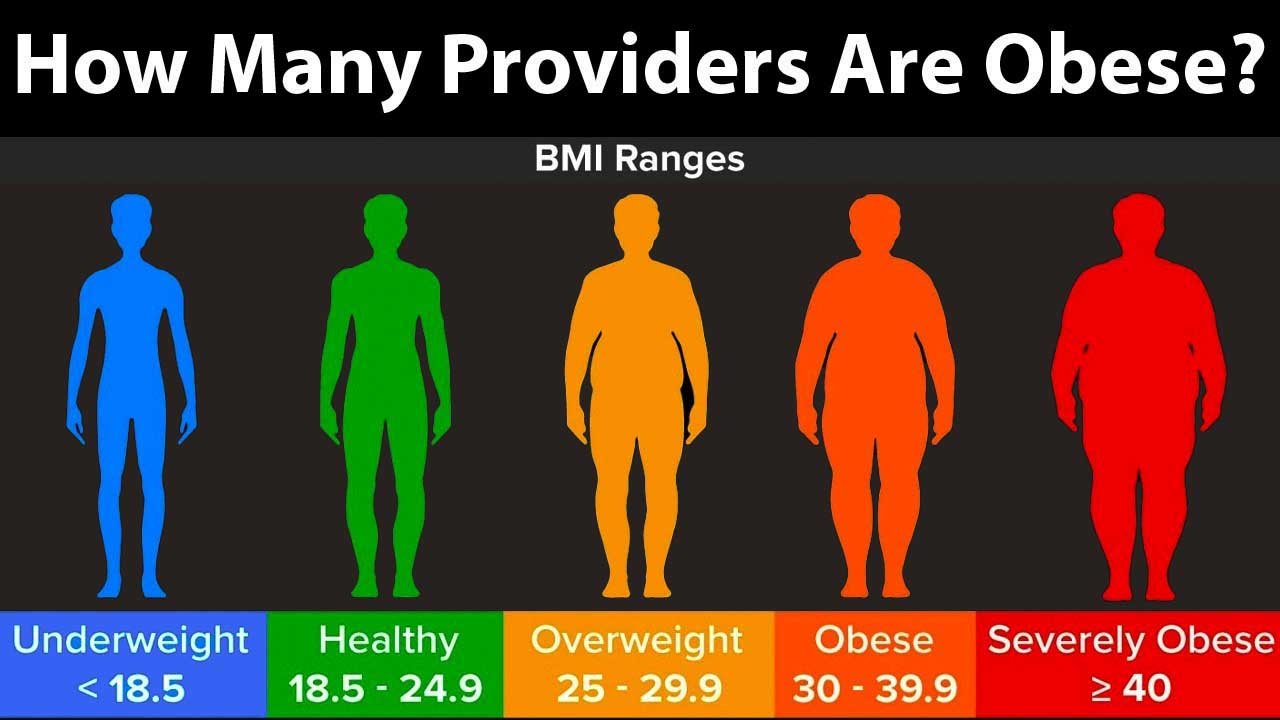
You step into a clinic, glance at your chart, and see a word that instantly worries you—”obese.” It doesn’t seem to match how you feel or live your life. Then your doctor reviews your tests, checks your overall health, and reassures you that everything looks perfectly fine. So why the mixed signals?
This confusion is more common than it seems. Many people are labeled as overweight or obese by BMI yet show no real signs of poor health. The truth is, BMI is a very simple calculation that often misses the bigger picture. It can’t measure things like muscle mass, body composition, or overall fitness—which is why your doctor may see a completely different story than the number on your chart.
At Health Calculator, the aim is to give you clear and honest tools. So let’s break down why BMI and your doctor don’t always agree — and what it actually means for your health.
What BMI Actually Measures (And What It Misses)
BMI stands for Body Mass Index. The formula is simple: divide your weight in kilograms by your height in meters squared. That single number then places you into one of four buckets—underweight, normal, overweight, or obese.
The formula was created by a Belgian mathematician named Adolphe Quetelet in the 1830s. His goal was to study population averages, not to diagnose individual patients. Yet somehow, that same tool became the global standard for clinical weight classification.
Here is the core problem. BMI only uses two inputs—weight and height. It has no idea whether your weight comes from muscle, fat, bone, or water. A 90 kg marathon runner and a 90 kg sedentary office worker will receive the exact same BMI score, even though their health profiles are completely different.
According to a 2016 study published in the International Journal of Obesity, roughly 54 million Americans classified as overweight or obese by BMI were found to be metabolically healthy based on blood pressure, glucose, and cholesterol markers. That number is hard to ignore.
When BMI Lies: Real Scenarios That Confuse the Scale
The muscular athlete problem is perhaps the clearest example. Muscle tissue is denser than fat tissue. So an athlete with 12% body fat and a strong build can easily land in the “overweight” or even “obese” category purely because of muscle mass. The BMI formula has no way to separate the two.
The “skinny fat” paradox works in the opposite direction.
A person who looks slim but carries excess visceral fat — the dangerous kind that wraps around organs — can show a perfectly normal BMI. Research from the Mayo Clinic Proceedings found that people with normal BMI but high body fat had a significantly higher risk of cardiovascular events than those with high BMI and normal body fat.
Older adults face a different distortion.
After age 50, the body typically loses lean muscle mass and gains fat even without weight changes. So the scale stays the same, BMI stays the same, but the health risk quietly rises.
Ethnic variation adds yet another layer. South Asian and East Asian populations tend to develop metabolic risk at lower BMI thresholds than European populations. The standard “obese” cutoff of 30 was largely built around data from white Western populations. The WHO itself has acknowledged that Asian-specific cutoffs may be more appropriate.
Try this now: Use the BMI calculator on Health Calculator to find your number—then read on to see exactly what that number does and does not tell you.
What Your Doctor Looks at Instead of BMI
A good clinician does not stop at BMI. Here is what the clinical assessment actually includes.
Waist-to-hip ratio is one of the strongest predictors of cardiovascular risk. A waist measurement above 88 cm (35 inches) for women or 102 cm (40 inches) for men signals elevated metabolic risk regardless of BMI Says You’re Obese, But the Doctor Says You’re Fine. This is because it directly reflects abdominal fat accumulation around vital organs.
Body fat percentage tells you the actual composition of your body weight. A healthy range is typically 10–20% for men and 18–28% for women, depending on age. Smart scales using bioelectrical impedance can give a rough estimate at home, though DEXA scans remain the gold standard.
Metabolic markers are what doctors rely on most heavily. These include fasting blood glucose (diabetes risk), LDL and HDL cholesterol (heart risk), triglycerides, and blood pressure. It is entirely possible to have a BMI of 32 and perfectly clean metabolic markers. It is also possible to have a BMI of 24 and dangerously elevated glucose levels.
Visceral fat measurement via DEXA scan or MRI is the most precise clinical tool available. Visceral fat — the fat stored around the liver, intestines, and heart — is far more metabolically dangerous than subcutaneous fat (the kind you can pinch under the skin). Two people with identical BMI values can have vastly different visceral fat levels.
The 2026 Perspective — How Medical Guidelines Are Shifting
The medical community is actively moving away from BMI as a standalone diagnostic tool. In 2023, the American Medical Association passed a landmark policy recognizing that BMI is an imperfect measure with significant limitations across race, ethnicity, age, gender, and body composition.
The AMA now recommends that BMI be used alongside — not instead of — other metabolic risk indicators. This is a significant shift from how BMI has been used for the past several decades.
New cardiometabolic risk models, such as the Body Roundness Index (BRI) and the Relative Fat Mass (RFM) formula, are gaining traction in research settings. Both use waist circumference and height to better approximate body fat distribution.
The takeaway is clear: a number alone never tells the full story. Health is multi-dimensional, and the tools you use to track it should be too.
How to Get a Clearer Picture of Your Own Health
Here is a practical starting point. Take your BMI reading and treat it as one data point—not a verdict. Then build around it.
First, measure your waist circumference at the navel with a simple tape measure. Compare it to the thresholds mentioned earlier. Second, consider a blood panel if you have not had one recently. Fasting glucose, lipid profile, and blood pressure together give a far more accurate health snapshot than any single number.
Third, use multiple calculators together. BMI works best when it is cross-referenced with calorie needs, ideal weight ranges, and activity levels.
At Health Calculator, all of these tools are available for free and designed to work together:
- BMI Calculator—Get your baseline number
- Calorie Calculator—Understand your daily energy needs
- Weight Loss Calculator—Plan a sustainable deficit
It takes less than 5 minutes to run all three and walk away with a genuinely useful picture of where you stand.
People Also Ask
Is a high BMI always unhealthy?
No. A high BMI can indicate excess fat mass, but it can also reflect high muscle mass, bone density, or body frame size. Metabolic markers like blood glucose and cholesterol are better indicators of actual health risk.
Can you be obese by BMI but still be healthy?
Yes, and research confirms it. Metabolic health, not weight classification alone, determines cardiovascular and diabetic risk. Doctors call this “metabolically healthy obesity,” though it is still an area of ongoing research.
What BMI do doctors actually use?
Most doctors still record BMI as part of routine care, but they treat it as a screening flag rather than a diagnosis. It prompts further investigation — not a health label by itself.
What is a better measure than BMI?
Waist-to-hip ratio, body fat percentage, and metabolic bloodwork are all more clinically meaningful than BMI alone. The combination of these metrics gives the most accurate picture.
Why does BMI differ by ethnicity?
The standard BMI thresholds were developed using predominantly white Western populations. Research consistently shows that South Asian, East Asian, and some Latino populations develop metabolic complications at lower BMI values, meaning the standard cutoffs underestimate risk for those groups.
Final Thoughts
BMI is not useless. It is a fast, free, and widely understood screening tool. The problem is not the number — it is the habit of treating it as the whole answer.
Your doctor’s more relaxed response is not dismissiveness. It is a reflection of looking at the full picture. Blood work, waist measurements, activity levels, and metabolic function all paint a story that a single formula simply cannot.

Dr. Grace is a health and wellness content author dedicated to providing clear, accurate, and easy-to-understand information on nutrition, weight management, fitness, and general health. She focuses on original, evidence-informed content that helps readers better understand health topics and make informed choices.