

Most people who want to lose 50 or more pounds start with motivation, a plan, and a deadline. Then, somewhere around week six, the scale stops moving. The motivation fades. The plan feels broken. And that deadline starts to look like a joke.
Nobody warned them about the real journey. This article will.
The brutal truth about losing 50+ pounds is that it takes longer than you want, it stalls more than you expect, and it asks more from you mentally than physically. But it is absolutely doable — if you understand what you’re actually signing up for.
The Brutal Truth About Losing 50+ Pounds Starts With the Timeline.
The first thing people get wrong is the timeline. They hear “two pounds a week” and do the math: 50 pounds divided by 2 equals 25 weeks. Six months. Done.
Real life doesn’t work that way.
A safe, sustainable rate of loss for most people is 0.5 to 1.5 pounds per week on average — not every single week. Some weeks you’ll lose three pounds. Some weeks you’ll lose nothing. Some weeks, you’ll gain half a pound of water weight while still being in a calorie deficit.
A realistic timeline for losing 50 pounds is 9 to 14 months for most people. That range exists because everyone’s metabolism, lifestyle, and adherence differ. To understand where your personal rate falls, it helps to first know your maintenance calories. Use a TDEE calculator to find out how many calories your body actually burns each day—that number becomes your baseline for every decision you make.
Trying to rush past this range by eating too little usually backfires. Your body adapts, your hunger hormones spike, your energy crashes, and most people either plateau hard or quit.

Why Plateaus Hit Harder When You Have More to Lose
Here’s something the fitness industry doesn’t talk about enough: the more weight you have to lose, the more dramatic your plateaus will be. And they will come.
A plateau is not your body “getting used to exercise.” That’s a myth. A plateau happens because as you lose weight, your body becomes smaller, and a smaller body burns fewer calories. The deficit you created on day one no longer exists in month four—because you are now a different-sized person.
This is not failure. This is physics.
When you hit a plateau, the options are the following:
Recalculate your calories. A 230-pound person and a 195-pound person do not have the same calorie needs. Recalculate your BMR (Basal Metabolic Rate) every 10 to 15 pounds lost. Your BMR tells you the minimum calories your body needs at complete rest—knowing this keeps your deficit accurate as your body changes.
Adjust your deficit, not destroy it. Most people respond to a plateau by cutting more calories. This works short-term and backfires long-term. A better move is a small additional reduction—100 to 200 calories—or adding movement, not both at once.
Take a diet break. Eating at maintenance for 1 to 2 weeks during a long cut has actual research behind it. It helps restore leptin levels and often breaks stalls without sacrificing progress.
The Brutal Truth About Losing 50+ Pounds: Your Body Will Fight You
This is the part nobody wants to hear. Your body does not want to lose fat. It interprets a sustained calorie deficit as a threat, not a lifestyle choice. So it pushes back — through hunger, through fatigue, through cravings that feel almost chemical (because they are).
Ghrelin, the hormone that makes you hungry, increases during weight loss. Leptin, the hormone that signals fullness, decreases. This is called metabolic adaptation, and it is a documented biological process — not a lack of willpower.
Understanding this changes how you approach the process. You stop blaming yourself for being hungry. You start planning for hunger instead of being surprised by it. High-volume, low-calorie foods, adequate protein (which is the most satiating macronutrient), and consistent meal timing all help manage this without white-knuckling every meal.
To stay on top of actual intake, many people find that tracking calories during the first few months builds awareness faster than any other approach. A calorie calculator can give you a target based on your goal, current weight, and activity level—giving you a number to work with instead of guessing.
Realistic Expectations: What 50 Pounds Actually Looks Like Month by Month
Month 1–2: The scale drops fast — often 6 to 12 pounds. Most of this is water weight and glycogen, not fat. It feels incredible. Enjoy it, but don’t expect it to continue.
Month 3–4: Real fat loss kicks in. Slower. Maybe 1 to 1.5 pounds per week. Clothes start fitting differently. Energy is inconsistent.
Months 5–7: The first real plateau arrives for most people. This is where 80% of people quit. Don’t. Recalculate, adjust, keep going.
Months 8–10: Progress resumes. Body composition shifts—you may be building muscle while losing fat, so the scale moves slowly, but your shape changes noticeably.
Months 11–14: The final stretch. Often, it’s the hardest mentally. The physical changes are real but slower. Consistency here separates people who make it from people who almost made it.
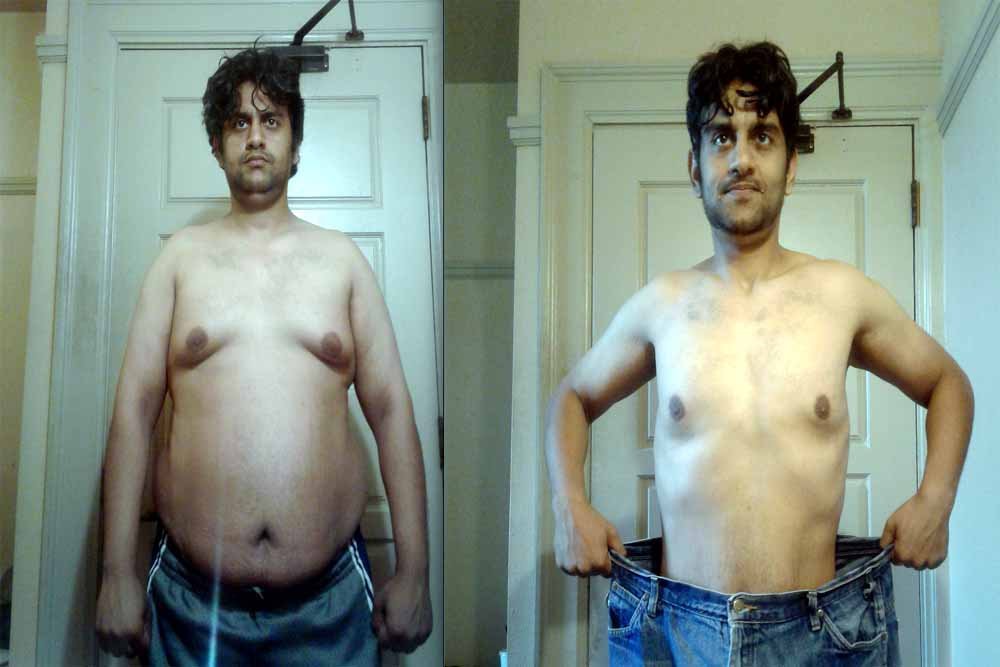
The Brutal Truth About Losing 50+ Pounds and Loose Skin
Yes, significant weight loss can cause loose skin. How much depends on your age, genetics, how fast you lost the weight, and how much muscle you built along the way.
Losing weight slowly (the 9 to 14-month range) reduces the severity compared to crash dieting. Strength training while losing fat helps fill out the skin with muscle. Staying hydrated and getting adequate protein support skin elasticity.
But there’s no supplement, cream, or hack that eliminates it entirely for everyone. If you lose 50+ pounds, some skin changes are normal. The trade-off is still worth it for most people — and many find that how they feel matters far more than how their skin looks after the fact.
The Mental Side Nobody Talks About
Losing 50+ pounds is a year-long project minimum. That means a year of:
- Making food decisions when you’re tired
- Going to the gym when you’d rather not
- Watching the scale do nothing for two weeks straight
- Explaining to people why you’re not eating certain things
- Staring at progress photos, wondering if anything is actually changing
The mental load is real. Identity shifts are real. People around you will not always react the way you expected—some will be supportive, some will be weird about it, some will offer you cake every time they see you.
Building psychological flexibility early matters more than any specific diet. The people who succeed long-term are not the most disciplined — they are the most adaptable. When a bad week happens (and it will), they return to the plan without drama. That skill is trainable.
People Also Ask
How long does it realistically take to lose 50 pounds?
For most people, 9 to 14 months at a safe, sustainable pace. Faster approaches exist but carry a higher risk of muscle loss, metabolic slowdown, and rebound weight gain.
Why did I stop losing weight after the first month?
Your initial fast loss was mostly water weight. Real fat loss is slower. Recalculate your calorie needs at your current weight and ensure your deficit is still in place.
Is it possible to lose 50 pounds without loose skin?
Losing weight slowly, building muscle, and staying hydrated all reduce loose skin. Complete prevention isn’t guaranteed for everyone, but the slower your loss, the better.
What is the best diet for losing 50+ pounds?
There is no single best diet. The best approach is one you can follow consistently for 9 to 14 months. Adequate protein, a sustainable calorie deficit, and mostly whole foods work across virtually every dietary style.
Why do I keep hitting plateaus?
Because your body adapts, as you lose weight, your calorie needs decrease. Recalculate regularly and adjust your intake or activity to maintain your deficit.
Final Thought
Nobody who has actually lost 50 or more pounds will tell you it was easy or that it happened on schedule. They’ll tell you it took longer than they planned, stalled more than they expected, and tested them in ways that had nothing to do with food.
But they’ll also tell you that understanding the process — the real timeline, the real plateaus, the real biology — made the difference between quitting and finishing.
Know your numbers. Use tools like a TDEE Calculator, track your BMR, and stay honest about your calorie intake. Adjust as you go. Expect the plateaus. Come back after the bad weeks.
That’s the actual plan. Everything else is noise.

Dr. Grace is a health and wellness content author dedicated to providing clear, accurate, and easy-to-understand information on nutrition, weight management, fitness, and general health. She focuses on original, evidence-informed content that helps readers better understand health topics and make informed choices.