
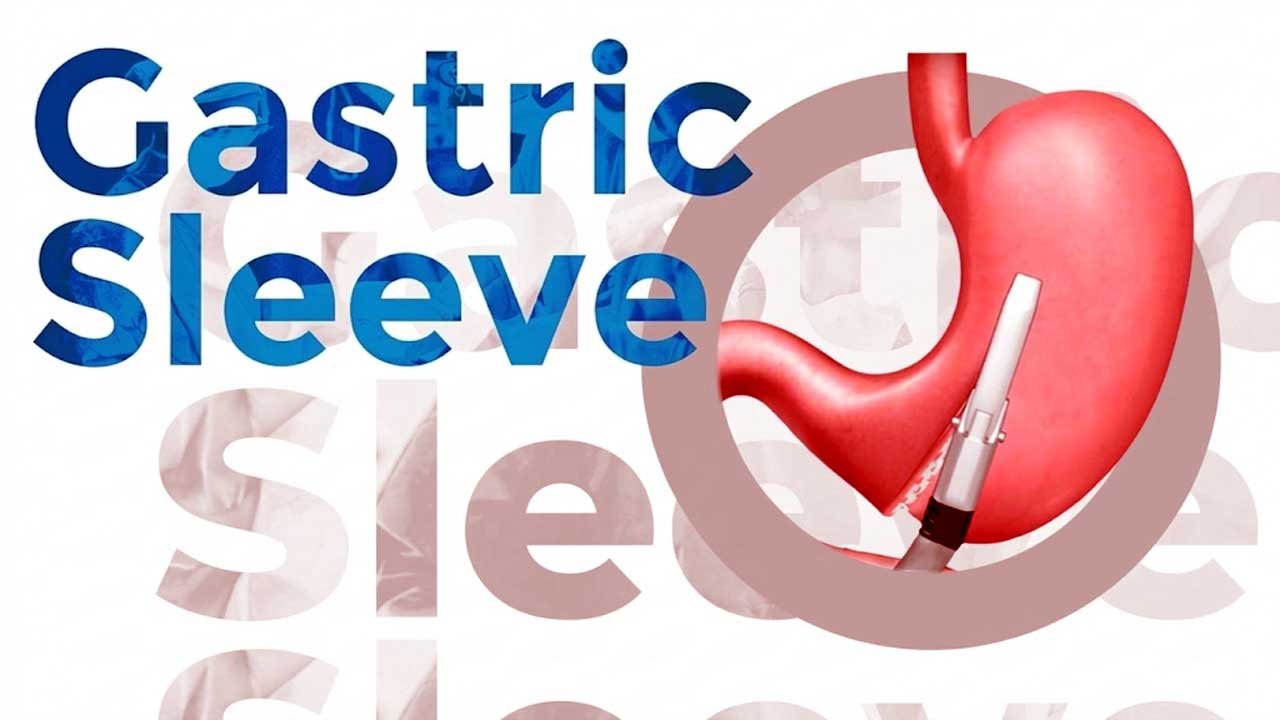
Imagine you just had gastric sleeve surgery. The first week feels like a victory. But soon, a question starts to nag at you—am I losing weight fast enough? That question has a clear, data-backed answer. A gastric sleeve weight loss calculator gives you a personalized projection based on your own body, not a generic promise. It is the most practical tool you can use to stay on track after surgery.
What Is a Gastric Sleeve Weight Loss Calculator?
A gastric sleeve weight loss calculator is a digital tool that estimates how much weight you will likely lose after sleeve gastrectomy surgery. It uses your starting weight, height, and gender to calculate two key numbers — your Ideal Body Weight (IBW) and your Excess Body Weight (EBW). From there, it applies medically recognized bariatric formulas to project your loss over time.
It is important to know that surgeons and bariatric dietitians use the same formulas behind the scenes. So, the calculator does not guess. It models your expected journey based on real clinical data.
The Two Core Formulas You Should Know
It is helpful to understand the math that powers the calculator. Two formulas drive nearly every bariatric progress tool available today.
Formula 1 — Percent of Excess Weight Lost (%EWL)
%EWL = [(Starting Weight − Current Weight) ÷ (Starting Weight − IBW)] × 100
Formula 2 — Total Body Weight Loss (%TBWL)
%TBWL = [(Starting Weight − Current Weight) ÷ Starting Weight] × 100
It is also worth knowing how to find your ideal body weight. A common formula used in bariatric settings works as follows. For men, start at 50 kg and add 0.9 kg for each centimeter above 152 cm. For women, start at 45.5 kg and apply the same addition. A reliable ideal weight calculator can do this instantly for you.
Gastric Sleeve Weight Loss Calculator by Month — What to Expect
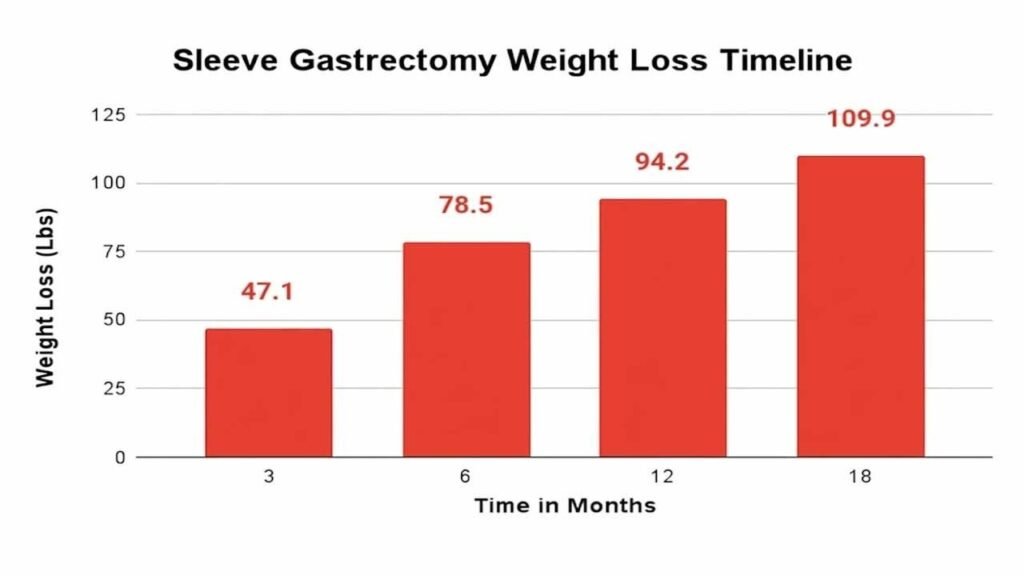
Do you want to know what a realistic monthly breakdown looks like? The gastric sleeve weight loss calculator by month maps your expected journey in distinct phases. Each phase has its own pace and its own challenges.
Month 1: Rapid fluid loss and reduced calorie intake lead to the fastest visible results. Most patients lose 5–8 kg (11–18 lbs). It is normal to feel exhausted at this stage — your body is adapting.
Months 2–3: The pace slows slightly but remains strong. A loss of 3–5 kg per month is the typical range. By the end of month 3, you should have lost around 35–45% of your excess body weight.
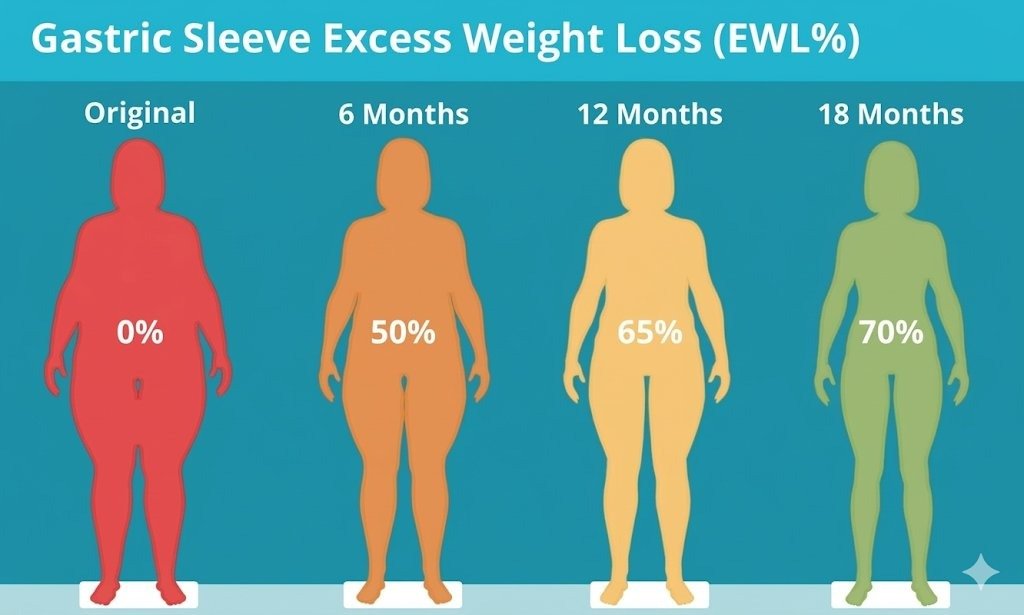
Months 4–6: Progress steadies. A consistent diet and light exercise keep momentum alive. Patients often reach 50–60% EWL by month 6. It is at this point that many notice significant changes in clothing size and energy levels.
Months 7–12: The weight loss continues at a slower but steady pace. Most patients hit 60–70% EWL by the end of month 12. A small plateau in this period is normal and expected.
Year 2 and Beyond: The body stabilizes. Slight weight regain (3–5 kg) is common but manageable with lifestyle adjustments. Long-term success depends on habits, not just surgery.
How to Use a Gastric Sleeve Weight Loss Calculator in kg
If you live outside the United States, you most likely track your weight in kilograms. The good news is that a gastric sleeve weight loss calculator kg works the same way — you just enter your data in metric units. No conversion is needed.
It is important to enter accurate values. A small error in your starting weight or height will shift every projected figure that follows. Use a digital scale for the most precise reading.
Weight Loss 4 Weeks After Gastric Sleeve — Is Your Progress Normal?
The first 4 weeks after gastric sleeve surgery are the most dramatic. It is normal to lose weight rapidly at this stage. A typical patient loses between 10 and 20 lbs (4.5 to 9 kg) in the first month alone.
Do you feel like your loss is slower than expected? It is important to consider a few factors before worrying. Fluid retention, hormonal shifts, and adjustments to your post-op diet all influence the scale in week 1 through week 4.
What Affects Your Results in the First Month?
- Adherence to the liquid and soft food diet plan
- Hydration levels — dehydration stalls the scale and affects energy
- Pre-surgery liver-shrinking diet compliance
- Hormonal fluctuations, especially in women
- Starting BMI — higher starting weights often show faster early loss
- Physical activity—even short walks—accelerates calorie burn
It is worth using a calorie calculator alongside your sleeve calculator to understand your daily deficit. A clear picture of calories in versus calories burned helps you stay accountable week by week.
A Real Patient’s Experience with the Gastric Sleeve Weight Loss Timeline
“I had no idea what to expect after my surgery. I was losing weight, but I thought it was too slow. Then my dietitian showed me the calculator. It turned out I was exactly on track—at 43% EWL by week 12. That number changed everything for me mentally.”
It is stories like this that reveal why the gastric sleeve weight loss timeline matters beyond just numbers. It is a psychological anchor. When you see that your real progress aligns with projected progress, your motivation stays intact.
It is also critical to remember that the timeline is not a rigid script. Some patients lose faster. Others plateau earlier. What matters is the overall direction — and the calculator keeps that direction visible.
Calculate Your Gastric Sleeve Weight Loss Now
Enter your details and get your personalized weight loss projection — free, instant, and accurate.
How to Use the Health Calculator Gastric Sleeve Tool — Step by Step
It takes less than 60 seconds to get your full weight loss projection. It is important to have your current measurements ready before you start. Here is the exact process.
- Open the gastric sleeve weight loss calculator at healthcalculator.co
- Select your gender — male or female
- Enter your height in cm or feet and inches
- Enter your starting weight in kg or lbs
- Select your surgery type—gastric sleeve is the default
- Click calculate—your projected loss at 3, 6, and 12 months appears instantly
- Record your results and revisit them monthly to track real progress
It is also a good habit to pair your results with a BMI calculator. Tracking your BMI monthly alongside your %EWL gives you a complete picture of where you started, where you are, and where you are headed.
How Often Should You Update the Calculator?
It is advisable to enter your updated weight every 4 weeks. Monthly check-ins help you spot a stall early, before it becomes a setback. It is also useful to bring your monthly data to follow-up appointments with your bariatric team so they can make informed adjustments to your diet or exercise plan.
Tips to Maximize Your Gastric Sleeve Weight Loss Timeline
The calculator tells you what to expect. What you do with that information is entirely in your hands. It is the combination of surgery, diet, and behavior that delivers lasting results.
- Prioritize protein—aim for 60–80g daily in the first 6 months
- Avoid liquid calories — sodas, juices, and alcohol stall progress fast
- Start walking from week 2 post-op and gradually increase duration
- Eat slowly and stop at the first sign of fullness — your stomach is small now
- Attend all follow-up appointments — your surgeon can catch issues early
- Track your progress monthly with the calculator to stay accountable
- Seek support from a bariatric dietitian if your %EWL drops below expected
It is equally important to look after your mental health. Rapid weight loss changes how you look and feel — and sometimes that transition is emotionally difficult. It is worth speaking to a counselor or joining a bariatric support group, especially in the first 6 months.
People also ask
How does a gastric sleeve weight loss calculator work?
It uses your starting weight, height, and ideal body weight to estimate how much excess weight you will lose over a set period. It applies two main formulas — %EWL and %TBWL — to generate a personalized projection based on standard bariatric clinical outcomes.
How much weight do you lose 4 weeks after a gastric sleeve?
Most patients lose between 10 and 20 lbs (4.5 to 9 kg) in the first 4 weeks. The exact amount depends on your starting weight, how well you follow your post-op diet, and your activity level.
What is the gastric sleeve weight loss timeline?
The typical timeline shows rapid loss in months 1–3, steady loss between months 3–9, and stabilization from month 12 onward. Most patients lose 60–70% of excess weight by 12–18 months post-surgery.
Can I use a gastric sleeve weight loss calculator in kg?
Yes. The Health Calculator tool supports both kg and lbs. Simply enter your weight in kilograms, and the calculator will apply the same bariatric formulas to give you your projected weight loss in metric units.
How much weight should I lose per month after a gastric sleeve?
On average, patients lose 4–8 kg (9–18 lbs) per month in the first 3 months. The rate gradually slows after that but remains consistent through the 12-month mark with proper diet and exercise.
Final Thoughts
A gastric sleeve weight loss calculator is not just a convenience tool. It is your post-surgery compass. It turns vague hopes into clear, measurable targets. It turns monthly weigh-ins from anxiety-inducing moments into confident checkpoints.
It is important to remember that the calculator gives you an estimate — not a guarantee. Real results depend on the effort you invest in your diet, activity, and mental health every single day. Surgery changes your anatomy. Lifestyle changes determine your long-term outcome.
So, are you ready to take the guesswork out of your journey? Head to Health Calculator and get your personalized projection in under a minute. It is free, it is instant, and it may well be the most useful 60 seconds you spend today.

Dr. Grace is a health and wellness content author dedicated to providing clear, accurate, and easy-to-understand information on nutrition, weight management, fitness, and general health. She focuses on original, evidence-informed content that helps readers better understand health topics and make informed choices.