

If you have ever tried to lose weight, someone probably told you to eat 1200 calories a day. It sounds simple. It sounds like a clean number. And yes, the scale might move in the first two weeks. But here is what most people never find out until months later — the 1200 calorie diet could be destroying your metabolism quietly, steadily, and in ways that make long-term weight loss almost impossible.
This is not about scaring you away from calorie tracking. It is about making sure the approach you choose actually works for your body — not against it.
Why the 1200 Calorie Diet Could Be Destroying Your Metabolism
Let us start with what is actually happening inside your body when you drop calories this low.
Your body is not stupid. When food intake drops sharply, it reads the situation as a threat — not a diet plan. The response is called adaptive thermogenesis, and it means your metabolism slows down to match the lower energy coming in. The lower you go, the harder your body fights to hold onto fat.
1200 calories is a number that gets thrown around because it sounds “safe enough.” But for most adults — especially anyone over 130 lbs or moderately active — 1200 calories is well below what the body needs to run basic functions. We are talking about breathing, digestion, hormone production, and brain activity. These things cost energy. When you starve them, things go wrong.
Use a BMR Calculator to see what your body actually burns at rest. For most women, it sits between 1400 and 1600 calories. For men, higher. Eating below your BMR every single day is not a diet — it is metabolic damage waiting to happen.

What Happens to Your Body on 1200 Calories
Muscle Loss Starts Faster Than You Think
When calories are too low, the body does not just burn fat. It breaks down muscle tissue for energy. Muscle is metabolically expensive — meaning it burns calories just to exist. Lose it, and your metabolism drops further. This is how people end up eating less than ever and still not losing weight.
Hormones Go Completely Off Track
Leptin — the hormone that tells your brain you are full — drops fast on very low-calorie diets. Ghrelin — the hormone that makes you hungry — rises to compensate. This is why people on 1200-calorie diets report obsessive thoughts about food, cravings that feel impossible to ignore, and a kind of mental fog that never quite lifts.
Your Resting Metabolism Physically Slows Down
Studies have shown that severe calorie restriction can reduce resting metabolic rate by 20–30%. That means even after you stop the diet, your body may be burning significantly fewer calories at rest than it did before you started. This is the mechanism behind “yo-yo dieting” — you lose weight, regain it, and end up heavier than before, often with more body fat and less muscle.
How to Know If 1200 Calories Is Too Low for You
This is not one-size-fits-all. A small, sedentary person in their 60s has different needs than a 30-year-old who does three gym sessions a week.
The right number is based on your Total Daily Energy Expenditure — the actual calories your body burns given your age, weight, height, and activity level. You can find yours using a TDEE Calculator. Most people are genuinely shocked when they see the real number.
Signs the 1200 Calorie Diet Is Hurting You
- Constant fatigue even after sleeping 7–8 hours
- Hair shedding or noticeable thinning
- Feeling cold all the time
- Mood swings, irritability, poor concentration
- Weight loss that stopped after the first few weeks
- Binge episodes after “good” days
Any three of these together are your body sending a clear signal.
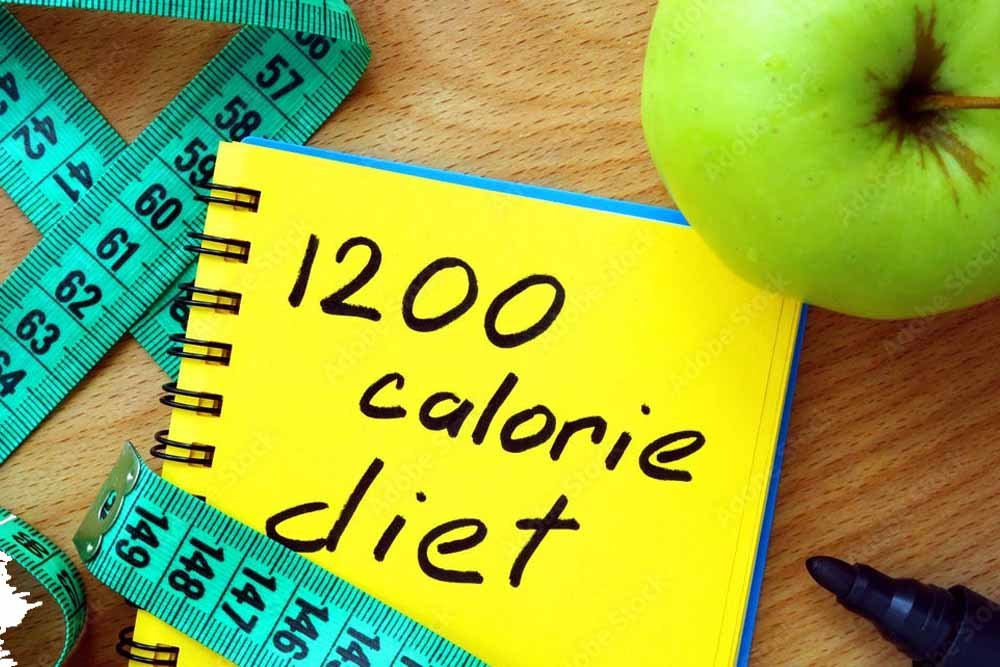
The Real Reason Why the 1200 Calorie Diet Could Be Destroying Your Metabolism Long-Term
Here is something the weight loss industry does not like to talk about: the damage from chronic under-eating can outlast the diet itself by months or even years.
Research on long-term calorie restriction shows that metabolic adaptation does not simply reverse when you go back to eating normally. Some people struggle with a suppressed metabolism for 12–24 months after coming off a very low-calorie diet. This is not a mental block. It is a measurable physiological change.
Why does this matter? Because millions of people have been cycling through 1200-calorie plans for years, wondering why their body no longer responds the way they once did. They are not lazy. They are metabolically adapted — and often doing it again on the same plan that caused the damage.
What Actually Works Instead
A Moderate Deficit, Not a Crash
Most nutrition professionals today recommend a deficit of 300–500 calories below your TDEE for steady, sustainable fat loss. At this level, muscle is preserved, hormones stay relatively stable, and the metabolism does not go into protection mode.
Run a Calorie Calculator to figure out your maintenance level first. Then subtract 300–500 calories from that number. That is your actual target — not 1200.
Prioritize Protein at Every Meal
Protein protects muscle during a calorie deficit. Aim for 0.7–1g per pound of body weight. This alone makes a significant difference in body composition outcomes compared to low-calorie, low-protein diets.
Resistance Training Changes the Equation
Muscle tissue burns more calories at rest than fat tissue. Adding two to three resistance training sessions per week while eating at a moderate deficit produces better long-term results than any crash diet — and it actively raises your resting metabolic rate over time.
Why the 1200 Calorie Diet Could Be Destroying Your Metabolism: The Science Behind It
To be precise about the mechanism: the scientific term is “metabolic adaptation” or “adaptive thermogenesis.” The body reduces thyroid hormone output, drops body temperature, reduces the energy cost of movement, and suppresses reproductive hormones — all to conserve energy.
A well-known study following contestants from a major weight loss TV show found that six years after the competition, participants had metabolisms running 500+ calories per day below what would be expected for their size. The majority had regained significant weight despite ongoing efforts. Their aggressive calorie restriction had fundamentally changed how their bodies processed energy.
This is not a fringe finding. It has been replicated across multiple study designs and populations.
How to Reverse Metabolic Damage from Crash Dieting
Stop the Restriction Cycle
The first step is stopping the damage. This means eating at or close to your maintenance level — yes, even if that feels counterintuitive when you want to lose weight.
Reverse Dieting
Reverse dieting involves gradually increasing calories over several weeks to give the metabolism time to recover without large fat gains. It is not fast. But it is the medically supported approach to restoring hormonal balance and metabolic function after a prolonged deficit.
Use a Weight Loss Calculator to map out a realistic timeline once your metabolism has recovered. Patience here pays back significantly compared to another crash cycle.
Track What Matters
Weight on a scale is not the full picture. Track energy levels, sleep quality, strength in workouts, and how your clothes fit. These are more reliable signals of real progress than daily weigh-ins.
Why the 1200 Calorie Diet Could Be Destroying Your Metabolism — Even When It “Works”
This is perhaps the most frustrating part: even when 1200 calories produces visible weight loss, it often comes at a cost most people do not realize they are paying.
That 15-pound loss over 8 weeks? Research suggests that on very low-calorie diets without resistance training, up to 30–50% of weight lost can come from muscle, not fat. So the scale shows a lower number, but body fat percentage may barely change. Meanwhile, the lower muscle mass means a permanently lower resting metabolism going forward.
The diet “worked” in the short term and set up a harder problem for the long term.
People also ask
Is 1200 calories ever the right amount?
For very small, sedentary individuals — typically petite women over 60 with minimal activity — 1200 calories may align with TDEE. For everyone else, it is likely below maintenance and below BMR. Always calculate your personal numbers before choosing a calorie target.
How long does it take to fix a slow metabolism?
Depending on how long and how severely calories were restricted, metabolic recovery can take anywhere from 8 weeks to over a year. Eating at maintenance, building muscle, and sleeping consistently are the main drivers of recovery.
Why do I keep gaining weight even on low calories?
This is a classic sign of metabolic adaptation. Your body has lowered its energy expenditure to match your intake. Adding more restrictions makes it worse. The path forward is usually eating more — not less — while rebuilding muscle mass.
What is a safer calorie deficit for weight loss?
A deficit of 300–500 calories below your TDEE is the standard recommendation for sustainable fat loss without triggering significant metabolic adaptation. Calculate your TDEE at healthcalculator.co to find your personal baseline.
Does exercise fix a damaged metabolism?
Resistance training is the single most effective tool for raising resting metabolic rate after crash dieting. It rebuilds the muscle tissue lost during restriction, which directly increases calorie burn at rest.
Final Thoughts
The reason why the 1200-calorie diet could be destroying your metabolism is not theoretical — it is backed by a decade of research on hormones, muscle physiology, and long-term weight outcomes. The diet industry keeps recycling this number because it produces fast results that look good on paper. The long-term picture is a different story.
Your body has a real energy requirement. Find it. Work with it. Use tools like the TDEE Calculator, BMR Calculator, and Calorie Calculator to build a plan based on actual data — not a round number pulled from a 1970s diet book.
Slow, sustainable fat loss done at the right deficit is not just easier to maintain. It is the only approach that does not leave you worse off than when you started.

Dr. Grace is a health and wellness content author dedicated to providing clear, accurate, and easy-to-understand information on nutrition, weight management, fitness, and general health. She focuses on original, evidence-informed content that helps readers better understand health topics and make informed choices.