
There is a deeply ingrained myth in the fitness world that weight loss requires grueling, high-intensity workouts that leave you breathless, sore, and exhausted the next morning. The truth, however, is far more encouraging. Science consistently shows that low-impact exercise can be equally effective for burning calories, improving cardiovascular health, and shedding excess weight — all without placing damaging pressure on your knees, hips, ankles, or spine.
Whether you are recovering from an injury, managing arthritis, carrying extra weight that makes high-impact movement painful, or simply looking for a smarter and more sustainable way to exercise, low-impact training is one of the most powerful tools available to you. At Health Calculator Co, we believe that the best exercise routine is the one that keeps you moving safely for years to come. With that philosophy in mind, here are five evidence-backed, joint-friendly exercises that will help you lose weight without the wear and tear.
1. Walking: The Underrated Fat-Burning Powerhouse
Walking is so simple that most people overlook it entirely as a serious exercise. That is a mistake. A brisk 30-minute walk burns between 150 and 200 calories, depending on your body weight and pace, and when done consistently, it creates the caloric deficit needed for meaningful, sustained weight loss.
What makes walking particularly valuable is its accessibility and its surprisingly strong effect on metabolism. Research published in the journal Obesity found that regular walking significantly reduced visceral fat — the dangerous abdominal fat linked to heart disease and type 2 diabetes — even without dietary changes. Beyond calorie burning, walking improves insulin sensitivity, which makes your body more efficient at processing blood sugar and less likely to store excess energy as fat.
From a joint-health perspective, walking is one of the most biomechanically forgiving activities you can perform. Unlike running, which generates ground reaction forces up to three times your body weight with each stride, walking keeps those forces at or below your body weight. This makes it ideal for people with knee osteoarthritis, hip pain, or lower back issues.
To maximize results, aim for at least 7,000 to 10,000 steps per day and gradually increase your pace over several weeks. Walking on varied terrain, including gentle inclines, engages more muscle groups and elevates your heart rate into the fat-burning zone without adding joint stress.
2. Swimming and Water Aerobics: Exercise Without the Gravity
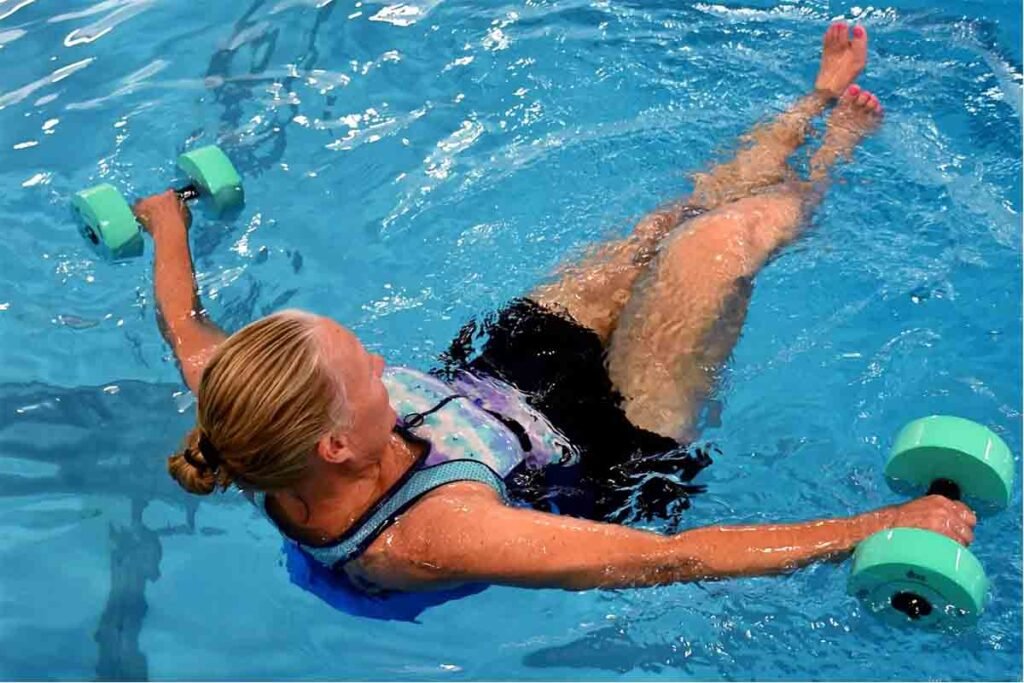
Water is perhaps the most forgiving exercise environment on earth. When you are submerged to your waist, your body bears only 50 percent of its weight. Submerged to the neck, that figure drops to approximately 10 percent. This dramatic reduction in gravitational load means your joints can move through their full range of motion without pain or pressure — and your muscles still have to work hard against the natural resistance of the water.
Swimming laps engages nearly every major muscle group in the body simultaneously. A 155-pound person burns roughly 400 to 500 calories per hour during moderate freestyle swimming, comparable to jogging but without a fraction of the joint impact. Water aerobics classes offer a similar caloric expenditure in a social, structured environment that many people find more motivating than solitary lap swimming.
The buoyancy of water also reduces inflammation in joints, which is why aquatic therapy is a cornerstone of rehabilitation programs for people recovering from orthopedic surgery. If you have severe joint pain that makes land-based exercise uncomfortable, water-based movement may be the most effective entry point into a consistent exercise habit.
A good starting protocol for beginners is three 30-minute sessions per week, focusing on comfortable, rhythmic movement rather than speed. As your endurance builds, you can increase session length and intensity progressively.
3. Cycling: High Calorie Burn, Zero Joint Percussion
Cycling — whether on a stationary bike, a road bike, or a recumbent cycle — delivers an impressive cardiovascular workout while keeping impact forces on the joints extremely low. The circular pedaling motion is inherently smooth and non-percussive, which means your knees, hips, and ankles never experience the jarring shock associated with running or jumping.
A moderate cycling session burns between 400 and 600 calories per hour, and high-intensity interval training (HIIT) on a stationary bike can push that figure considerably higher. More importantly for weight loss, cycling has been shown to suppress appetite hormones and improve the body’s ability to oxidize fat as fuel, particularly when sessions are performed in a fasted or mildly fasted state in the morning.
Stationary bikes are especially useful for people with balance concerns or those who live in climates that make outdoor activity difficult. Recumbent bikes, which position the rider in a semi-reclined posture with the pedals in front rather than below, are particularly recommended for individuals with lower back pain or hip issues, as they distribute body weight more evenly and reduce lumbar stress.
When setting up a bike — stationary or otherwise — ensure that the seat height allows a slight bend in the knee at the bottom of the pedal stroke. Poor bike fit is one of the most common causes of knee pain in cyclists, and a simple adjustment can make the difference between a comfortable, effective workout and one that causes harm.
4. Yoga and Pilates: Strength, Flexibility, and a Leaner Body
Yoga and Pilates are often categorized as flexibility or relaxation practices, but that characterization severely undersells their capacity to support weight loss. Both disciplines build lean muscle mass, and muscle is metabolically active tissue — meaning it burns calories even at rest. A stronger body has a higher resting metabolic rate, which accelerates fat loss over time even when you are not exercising.
A 60-minute vinyasa yoga session burns between 300 and 450 calories, while a vigorous Pilates mat class can burn 250 to 350 calories per hour. These figures are comparable to many moderate cardio activities, and they come with the added benefits of improved posture, core stability, and body awareness — all of which support safer, more efficient movement in everyday life.
From a joint perspective, yoga and Pilates are exceptionally gentle. The slow, controlled nature of the movements reduces the risk of acute injury, and the emphasis on alignment and breath helps practitioners develop kinesthetic awareness that prevents poor movement habits from developing. Many poses and exercises can be modified with props like blocks, straps, and resistance bands to accommodate a limited range of motion or specific joint conditions.
For weight loss specifically, hot yoga — practiced in a room heated to around 95 to 105 degrees Fahrenheit — has gained popularity for its elevated caloric burn due to the thermal environment. However, standard yoga performed consistently delivers meaningful results without the additional physiological demands of heat exposure.
5. Elliptical Training: The Closest Thing to Running Without the Damage
The elliptical machine was designed with one specific purpose: to replicate the cardiovascular and muscular demands of running while eliminating the impact that makes running hard on joints. It achieves both goals exceptionally well. The elliptical keeps your feet in contact with the pedals throughout the entire stride cycle, removing the moment of impact that defines running and causes cumulative stress on the knees, hips, and lower back.
Research comparing elliptical training to treadmill running has found that the two activities produce similar heart rate responses and caloric expenditure at equivalent effort levels. A 30-minute elliptical session at moderate resistance burns roughly 270 to 400 calories, and increasing the resistance or incline can push that number higher while still maintaining the low-impact nature of the exercise.
The dual-action arm handles found on most elliptical machines add an upper-body component that engages the chest, back, shoulders, and arms — turning what might otherwise be a purely lower-body workout into a full-body calorie burn. For those dealing with knee pain in particular, the elliptical is often the first piece of cardio equipment recommended by physical therapists as a bridge between rehabilitation and return to full activity.
For best results, vary your elliptical sessions between steady-state cardio and interval training. In a typical interval session, you might alternate between two minutes at a comfortable resistance and one minute at the highest resistance you can sustain. This approach elevates post-exercise oxygen consumption — the so-called afterburn effect — which means your body continues burning calories at an elevated rate for hours after you finish.
Final Thoughts
The path to sustainable weight loss is not paved with pain, exhaustion, or exercises that leave your body feeling broken. It is built on consistency, and consistency only happens when your chosen activities feel sustainable and safe. The five exercises outlined above — walking, swimming, cycling, yoga or Pilates, and elliptical training — all share a common quality: they allow you to work hard enough to create real change without demanding a price from your joints that eventually forces you to stop.
At Health Calculator Co, our core belief is that informed, personalized movement is the foundation of long-term health. Start with whichever exercise on this list appeals to you most, commit to three sessions per week, and build gradually from there. Use our health calculators to track your caloric needs, monitor your BMI, and set realistic goals that keep you motivated as the weeks progress.

Dr. Grace is a health and wellness content author dedicated to providing clear, accurate, and easy-to-understand information on nutrition, weight management, fitness, and general health. She focuses on original, evidence-informed content that helps readers better understand health topics and make informed choices.