
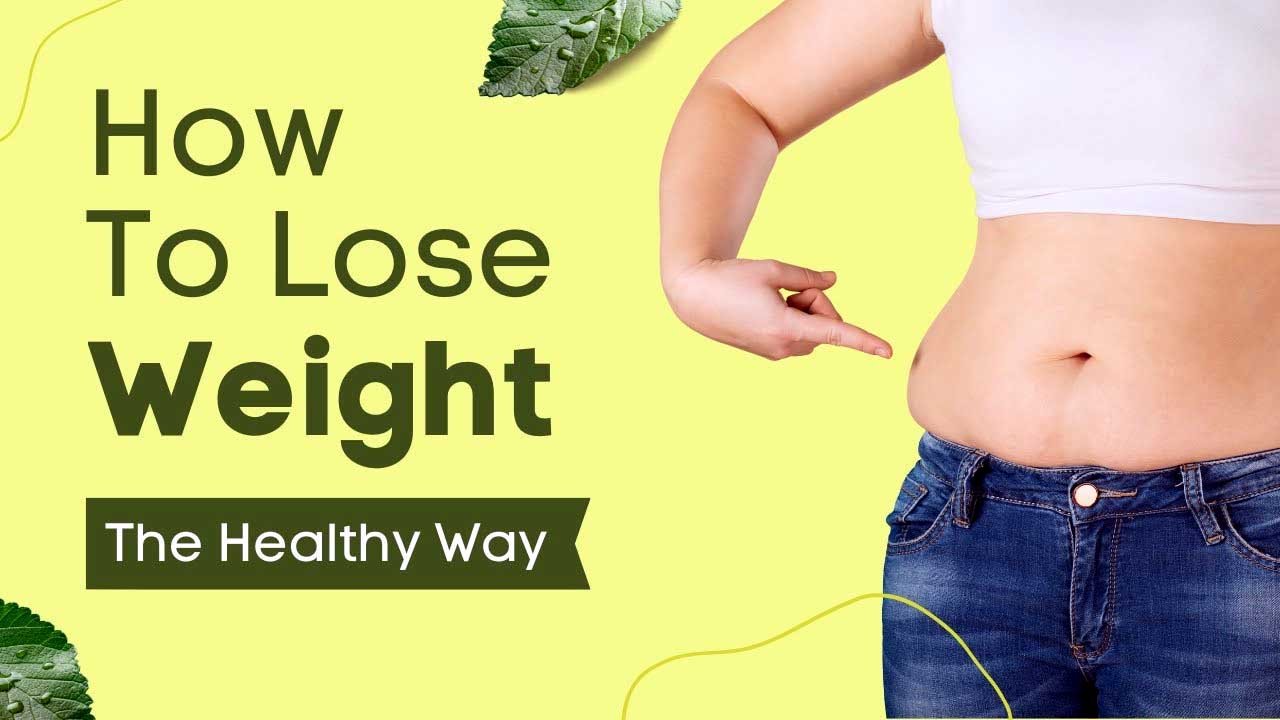
Most people try to lose weight fast. The problem is that speed is exactly what makes weight loss dangerous.
Crash diets destroy muscle. Extreme calorie cuts slow your metabolism. Fad plans fail within weeks. The result? The scale goes down, life goes up in frustration, and the weight comes right back.
The good news is real: lasting fat loss does not have to be complicated. It just has to be safe. Below are 10 strategies backed by research — not trends — to help you lose weight safely and keep it off for good.
What Does “Lose Weight Safely” Actually Mean?
It is important to set a realistic expectation before anything else.
The Centers for Disease Control and Prevention (CDC) defines safe weight loss as 0.5 to 1 kg (1–2 lbs) per week. Anything faster than that typically comes from water loss or muscle, not fat.
Slow and steady is not a cliché. It is literally what the science recommends.
Calculate Your Calorie Deficit — But Do Not Go Too Low
Fat loss comes down to one non-negotiable truth: the body must burn more calories than it takes in.
A deficit of 500 to 750 calories per day leads to roughly 0.5–1 kg of fat loss per week. That range is supported by the American Journal of Clinical Nutrition and aligns with CDC guidelines.
It is critical to understand that going below 1,200 calories per day (for women) or 1,500 (for men) triggers metabolic slowdown. The body senses starvation and holds onto fat even harder.
Use the Health Calculator’s calorie calculator to find your exact daily target — no guesswork needed.
Track Your TDEE
Know What Your Body Actually Burns
TDEE stands for Total Daily Energy Expenditure. It is the total number of calories the body burns in a day, including activity.
Most people underestimate their TDEE by 20–30%. That mistake leads to a deficit that is either too small (no fat loss) or too large (muscle loss).
It is important to calculate TDEE before setting any calorie target.
Try the TDEE Calculator on Health Calculator to get a number based on your actual weight, height, age, and activity level.
Prioritize Protein at Every Meal
Protein is the most important macronutrient for safe weight loss — full stop.
A 2020 meta-analysis in Obesity Reviews found that high-protein diets preserve lean muscle mass during a calorie deficit. Muscle burns more calories at rest than fat does. The body that holds onto muscle loses fat faster.
The International Society of Sports Nutrition (ISSN) recommends 1.6 to 2.2 grams of protein per kg of lean body mass per day for people in a deficit.
Good sources include chicken breast, eggs, Greek yogurt, cottage cheese, lentils, and fish.
Not sure how much lean mass you carry? Use the Lean Body Mass Calculator to find out.

Cut Ultra-Processed Foods — Not Food Groups
Many weight loss plans ban carbs, fat, or dairy entirely. That approach is neither safe nor necessary.
Research published in Cell Metabolism (2019) showed that ultra-processed food consumption — not specific macronutrients — was the strongest dietary predictor of weight gain. Participants who ate ultra-processed diets consumed an average of 500 extra calories per day without realizing it.
The goal is not to eliminate carbs. It is to replace packaged, processed food with whole food alternatives.
Swap white bread for oats. Replace crisps with nuts. Trade fizzy drinks for water or sparkling water with lemon.
Small swaps. Big results over time.
Add Strength Training — Not Just Cardio
Cardio burns calories. Strength training changes body composition.
A study in Obesity (2021) found that resistance training during a calorie deficit preserved significantly more lean muscle than cardio alone. More muscle means a higher resting metabolic rate, which means the body burns more calories even at rest.
It is recommended to do 2 to 3 strength sessions per week, even if it is just bodyweight exercises at home.
Combine that with 150 minutes of moderate cardio per week (as recommended by the WHO), and the result is a fat-burning environment that is sustainable.
Do Not Skip Sleep — It Directly Controls Hunger Hormones
Poor sleep is one of the most overlooked causes of weight gain and failed weight loss.
Research from the Annals of Internal Medicine found that sleeping less than 7 hours per night reduced fat loss by 55% in people on the same calorie-restricted diet, compared to those who slept 8.5 hours.
The reason is hormonal. Sleep deprivation raises ghrelin (the hunger hormone) and lowers leptin (the satiety hormone). The result is constant hunger, even after a full meal.
It is important to target 7 to 9 hours of sleep per night as a non-negotiable part of the weight loss plan.
Manage Stress — Cortisol Makes Fat Loss Almost Impossible
Chronic stress keeps cortisol levels elevated. High cortisol promotes fat storage, particularly around the abdomen.
A 2018 study in Obesity found a direct correlation between self-reported stress levels and abdominal fat accumulation – independent of diet and exercise.
Daily stress management does not have to be complex. A 10-minute walk, 5 minutes of deep breathing, or a consistent sleep routine all reduce cortisol meaningfully.
The body cannot lose fat efficiently in a state of chronic stress. Address the stress first.
Drink More Water — Especially Before Meals
Water has a measurable effect on weight loss. It is not a myth.
A study in Obesity found that drinking 500 ml of water 30 minutes before meals reduced calorie intake by 13% in overweight adults over 12 weeks.
Water also prevents the confusion between thirst and hunger — a mistake that adds hundreds of unnecessary calories per day.
The target is 2 to 2.5 litres per day for most adults, more on active days.
Practice Portion Awareness — Without Obsessive Counting
Calorie counting works, but it is not the only path. Many people lose weight effectively through portion awareness alone.
Research from the British Journal of Nutrition showed that people who used smaller plates and bowls consumed 22% fewer calories without feeling deprived.
It is practical to use your hand as a guide:
- A palm-sized portion of protein
- A fist for carbohydrates
- A thumb for fats
- Two fists for vegetables
No app. No scale. Just awareness.
Track Progress Beyond the Scale
The scale is one data point. It is not the whole picture.
Body weight fluctuates by 1–3 kg daily due to water, food volume, and hormones. Someone who loses 1 kg of fat and gains 0.5 kg of muscle in a week may see no scale movement at all — but their body composition improved significantly.
It is important to track multiple indicators:
- Waist circumference (measured monthly)
- How clothes fit
- Energy levels
- Lean body mass (tracked with a calculator)
- Strength progress in the gym
The BMI Calculator on Health Calculator and the Weight Loss Calculator together give a much fuller picture than the scale alone.
How Fast Can You Safely Lose Weight?
A realistic timeline matters. Unrealistic expectations are the number one reason people quit.
| Goal | Safe Timeframe |
|---|---|
| Lose 5 kg | 5–10 weeks |
| Lose 10 kg | 10–20 weeks |
| Lose 20 kg | 5–10 months |
These ranges assume a consistent 500–750 calorie deficit per day, adequate protein, strength training, and proper sleep. Results vary based on starting weight and adherence.
People Also Ask
How much weight can I lose in a month safely?
A safe rate is 0.5 to 1 kg per week. In one month, a realistic and healthy target is 2 to 4 kg. Faster loss is possible early on due to water weight, but sustained fat loss follows the slower pace.
Is it safe to lose weight without exercise?
Diet alone can produce weight loss. However, exercise – especially strength training – preserves muscle, improves metabolism, and makes the weight loss more sustainable. It is recommended to combine both for the best long-term results.
What is the safest diet to lose weight?
No single diet is universally best. The safest approach is a moderate calorie deficit with high protein, whole foods, and no elimination of entire food groups. Consistency over weeks and months matters more than the specific plan.
How do I know if I am losing fat or muscle?
Track lean body mass monthly using an LBM calculator. If your weight drops but lean mass stays stable or increases, the loss is primarily fat. If lean mass drops significantly, increase protein intake and add or maintain strength training.
Can stress really stop weight loss?
Yes. Chronic stress elevates cortisol, which promotes fat storage and increases appetite — particularly for high-calorie foods. Stress management is a direct part of any effective and safe weight loss plan.
Final Thoughts
Safe weight loss is not glamorous. There is no shortcut, no secret supplement, and no hack that outperforms consistency over time.
The strategies above are not new. They are not trending. They are simply what the research has confirmed, over and over, actually works.
Start with one change. Calculate your calorie needs. Track your lean mass. Add protein. Sleep more. The results follow the actions — always.

Dr. Grace is a health and wellness content author dedicated to providing clear, accurate, and easy-to-understand information on nutrition, weight management, fitness, and general health. She focuses on original, evidence-informed content that helps readers better understand health topics and make informed choices.