
Have you ever felt constantly tired, cold, or mentally foggy – and wondered if your thyroid is to blame? Millions of adults face the same question every day. Hypothyroidism affects roughly 5% of the global population, and levothyroxine is the most commonly prescribed thyroid medication in the world. The real challenge is not the diagnosis. It is finding the right dose.
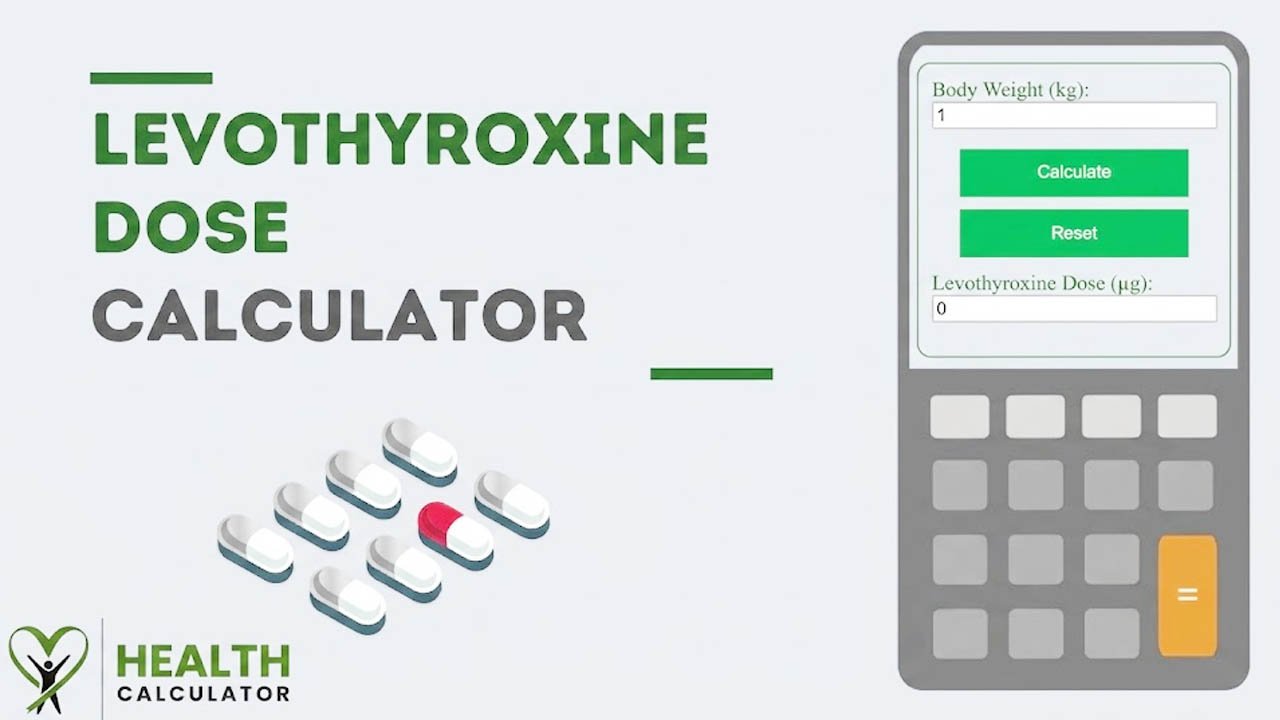
A weight-based levothyroxine dose calculator removes the guesswork. It gives you a clear, evidence-based starting point before your first doctor’s visit or medication refill. Read on to understand how the calculation works, what factors change your dose, and how to use the Health Calculator tool for fast, accurate results.
What Is a Weight-Based Levothyroxine Dose Calculator?
A weight-based levothyroxine dose calculator is a digital tool that estimates your ideal starting dose of levothyroxine based on your body weight. It follows the standard clinical formula endorsed by the American Thyroid Association (ATA) and the American Association of Clinical Endocrinologists (AACE):
Dose (mcg/day) = 1.6 × Weight (kg)
So, if you weigh 70 kg, your estimated starting dose is approximately 112 mcg per day.
It is important to know that this formula has been validated across multiple clinical trials since the 1980s. A landmark randomised controlled trial of 50 adults confirmed that patients started on the 1.6 mcg/kg dose reached a normal thyroid state — called ‘euthyroidism’ — significantly faster than patients started on a low, titrated dose.
The calculator on Health Calculator applies this exact formula. It also adjusts for key clinical factors like age, BMI, heart conditions, and pregnancy.
How to Use the Levothyroxine Dose Calculator
Do you want accurate results in under 30 seconds? Follow these five simple steps.
Select Your Clinical Scenario
The calculator shows five scenario cards at the top. Tap the one that matches your situation. New Diagnosis is for adults who have just been diagnosed with hypothyroidism. Post-Thyroidectomy Benign is for patients who had their thyroid removed for a non-cancer reason. Post-thyroidectomy cancer is for thyroid cancer patients who need TSH suppression. Subclinical hypothyroidism is for patients with mildly elevated TSH and normal T4. Pregnancy is for women who are currently pregnant or have just become pregnant. The selected card turns green. It is important to pick the right one because each scenario uses a different dose multiplier.
Enter Your Weight and Height
First, choose your preferred unit by tapping kg or lbs at the top of this section. Then enter your body weight in the first box. It is the only required field. It is also important to add your height in the second box. The calculator uses it to check your BMI automatically. Patients with a BMI of 30 or above need ideal body weight instead of actual body weight to avoid overdosing. The calculator handles this switch on its own.
Enter Your Age and Sex
Type your age in years in the Age box. If you are 65 or older, the calculator automatically lowers your starting dose to a safer level. Select Female or Male from the Sex at Birth dropdown. The calculator uses this to apply the correct ideal body weight formula if needed.
Flag Any Special Conditions
You will see two toggle switches in this section. Tap the Heart Condition toggle if you have a history of heart attack, arrhythmia, angina, or heart failure. The toggle turns green, and the calculator immediately overrides the weight-based dose to 25 mcg only. It is a critical safety adjustment. The Use Ideal Body Weight toggle turns on automatically if your BMI is 30 or above. You can also turn it on manually if you already know your BMI is high.
Tap Calculate My Starting Dose
Hit the green button at the bottom. Your results appear instantly below the button. You get your calculated dose in mcg per day, the nearest available tablet strength; the weight the calculator used, your BMI, and clinical notes based on your exact scenario. These notes include your TSH target, monitoring schedule, and any safety reminders.
Weight-Based Levothyroxine Dose Calculator
Evidence-based starting dose for hypothyroidism in adults · Formula: 1.6 mcg × kg
Levothyroxine Dosage by Weight — A Quick Reference Table
Are you curious about what dose other adults at your weight typically start with? Here is a general overview for healthy adults with primary hypothyroidism, based on the standard 1.6 mcg/kg formula.
| Body Weight | Estimated Dose (mcg/day) | Nearest Tablet Strength |
| 45 kg (99 lbs) | 72 mcg | 75 mcg |
| 60 kg (132 lbs) | 96 mcg | 100 mcg |
| 70 kg (154 lbs) | 112 mcg | 112 mcg |
| 80 kg (176 lbs) | 128 mcg | 125 or 137 mcg |
| 90 kg (198 lbs) | 144 mcg | 150 mcg |
These numbers assume a normal BMI and no cardiac history. For obese patients, the calculator uses IBW instead, and the dose comes out lower. That is the correct adjustment, not an error.
Why Ideal Body Weight Matters for Obese Patients
It is important to know that fat tissue does not require thyroid hormone at the same rate as muscle mass. So, if a doctor doses levothyroxine based on actual body weight in an obese patient, the dose overshoots the patient’s real metabolic need.
A study published in the ATA guidelines found that patients with higher BMI required only 1.3 mcg/kg/day — not the standard 1.6 — when actual body weight was used. The ATA and AACE both recommend using ideal body weight for patients with obesity.
The Health Calculator tool handles this automatically. It detects a BMI of 30 or above and switches to IBW for the calculation, so you do not have to do it manually.

Levothyroxine Dose Adjustments for Special Populations
Not everyone fits the standard formula. It is critical to understand how your personal health history changes your dose.
Older Adults (65+)
Patients aged 65 and older clear levothyroxine more slowly. Their hearts are also more sensitive to rapid hormone replacement. The recommended starting dose for this group is only 25–50 mcg/day, with slow upward titration every 4–6 weeks.
Patients With Heart Disease
Do you have a history of angina, heart attack, arrhythmia, or heart failure? If yes, your starting dose must be low — typically 25 mcg/day. Starting at a full replacement dose can trigger chest pain or dangerous arrhythmias. The calculator drops the dose automatically when you check the heart condition box.
Post-Thyroidectomy Patients
After total thyroid removal for a benign reason, most adults need the full 1.6–1.7 mcg/kg dose since they have no remaining thyroid function. After thyroidectomy for thyroid cancer, the target is TSH suppression — so the dose goes up to approximately 2.0–2.2 mcg/kg/day.
Pregnancy
Thyroid hormone requirements rise sharply during pregnancy. New or pre-existing hypothyroidism in pregnancy typically needs 1.2–2.3 mcg/kg/day, and patients with pre-existing hypothyroidism should increase their pre-pregnancy dose by 20–30% as soon as pregnancy is confirmed. The TSH target in the first trimester is below 2.5 mIU/L — tighter than the standard adult range.
Available Levothyroxine Tablet Strengths
Once the calculator gives you your ideal dose in mcg, the next step is picking the closest available tablet. Levothyroxine tablets come in standard strengths:
25, 50, 75, 88, 100, 112, 125, 137, 150, 175, 200, and 300 mcg
If your calculated dose falls between two available strengths, it is acceptable to round by 10–15 mcg to the nearest tablet. Alternatively, a doctor can combine two tablet strengths or use alternate-day dosing. Levothyroxine has a long half-life of approximately 7 days, so slight daily variations do not disturb your thyroid hormone levels.
Brand-name options include Synthroid, Tirosint, Levoxyl, and Unithroid. Generic levothyroxine is equally effective and typically less expensive. The choice between brand and generic depends on availability, cost, and personal preference.
How to Take Levothyroxine Correctly
Getting the dose right is only half the battle. How you take levothyroxine affects how well your body absorbs it.
- Take it on an empty stomach first thing in the morning
- Wait 30–60 minutes before eating or drinking anything other than water
- Separate calcium or iron supplements by at least 4 hours
- Take it 3–4 hours after your last meal if you prefer a bedtime dose
- If a dose is missed, take double the next day — it is generally safe to do so
It is important to know that drugs like cholestyramine, sucralfate, aluminum antacids, and iron supplements can block levothyroxine absorption. Drugs like rifampin and carbamazepine can increase its clearance. Tell your doctor about every supplement and medication you take.
How to Monitor Your Levothyroxine Dose Over Time
Starting the right dose is just the beginning. It is essential to monitor your response with regular blood tests.
Doctors check serum TSH every 4–8 weeks after starting or changing a levothyroxine dose. The target TSH for most adults with primary hypothyroidism is 0.5–2.0 mIU/L. Once stabilized, tests move to every 6–12 months.
If your TSH stays high after several dose increases, it may signal malabsorption or medication nonadherence. Doses above 200–300 mcg/day that still fail to normalize TSH warrant evaluation by an endocrinologist.
People Also Ask:
How do I calculate my levothyroxine dose by weight?
Multiply your weight in kilograms by 1.6. So, a 65 kg adult needs approximately 104 mcg/day, rounded to the nearest tablet strength of 100 or 112 mcg. Use ideal body weight if your BMI is 30 or above.
What is the standard starting dose of levothyroxine for hypothyroidism?
The standard starting dose for healthy adults under 65 with primary hypothyroidism is 1.6 mcg/kg/day of levothyroxine, per ATA and AACE guidelines.
Is 50 mcg of levothyroxine a low dose?
Yes, 50 mcg is considered a low dose. It is typically used for elderly patients, patients with heart disease, or those with subclinical hypothyroidism. Most adults with overt hypothyroidism eventually need 100–150 mcg/day.
Can I use actual body weight for the levothyroxine calculation if I have obesity?
No. For patients with a BMI of 30 or above, ideal body weight should replace actual body weight to prevent overdosing. Fat tissue does not use thyroid hormone at the same rate as lean muscle.
How often should I adjust my levothyroxine dose?
Dose adjustments of 12.5–25 mcg should happen every 4–8 weeks, guided by TSH results. Never adjust your dose without a blood test and doctor approval.
Does levothyroxine dosing change during pregnancy?
Yes. Thyroid hormone requirements increase significantly during pregnancy. A 20–30% dose increase is usually needed, and TSH should stay below 2.5 mIU/L in the first trimester.
Final Thoughts
A weight-based levothyroxine dose calculator gives you a smart, evidence-backed starting point for hypothyroidism treatment. It does not replace your doctor. It empowers you to walk into every appointment with real numbers, real questions, and a real understanding of your thyroid health.
The formula is simple: 1.6 mcg × your weight in kg. But the adjustments — for age, BMI, heart health, pregnancy, and thyroid surgery history — are what separate a safe starting dose from a risky one. The Health Calculator tool handles all of it in seconds.
Use the Levothyroxine Dose Calculator at Health Calculator to find your weight-based starting dose today. Then share the result with your prescribing doctor. It is a fast, free, and clinically grounded first step toward better thyroid health.

Dr. Grace is a health and wellness content author dedicated to providing clear, accurate, and easy-to-understand information on nutrition, weight management, fitness, and general health. She focuses on original, evidence-informed content that helps readers better understand health topics and make informed choices.